Five Centuries of History
The Name That Carries a Myth
From Botticelli to the Medici, from legend to island: the story behind Diadema di Venere.
The Myth
Venus and the Gems of the Tyrrhenian Sea
In the 8th century BC, Hesiod wrote in the Theogony the story of a birth without a mother. Where the blood of Uranus fell into the Tyrrhenian Sea, the foam opened and Venus emerged — fully grown, radiant, perfect.
As the wind of Zephyr carried her to shore, the gems of her diadem fell into the crystal waters and became land: the islands of the Tuscan Archipelago. Elba, the largest and most luminous, is the one that shines brightest.
1484 — Gallerie degli Uffizi
Botticelli and the Medici
Around 1484, Sandro Botticelli received a commission from the most powerful family in Tuscany. Lorenzo di Pierfrancesco de' Medici wanted to immortalise this mythical birth. The result was The Birth of Venus: one of the most famous works in art history, today at the Uffizi Galleries in Florence.
The orange trees in the background are not accidental: they are the heraldic symbol of the Medici — mala medica, the 'Medici apple'. Botticelli's Venus is not just mythology: it is a declaration of power veiled beneath timeless beauty.
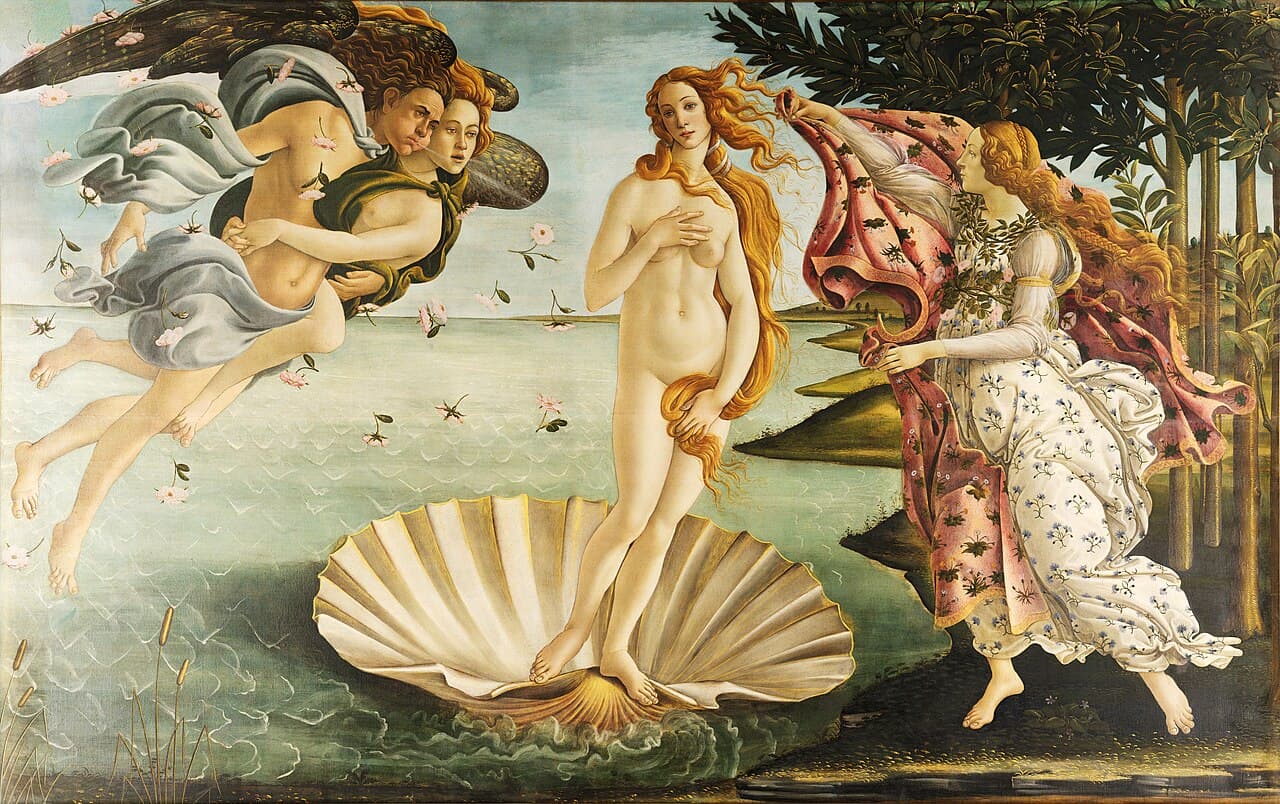
Sandro Botticelli, The Birth of Venus, c. 1484–1486. Gallerie degli Uffizi, Florence. Public domain.
1548 — Island of Elba
Cosimo I and the City of the Cosmos
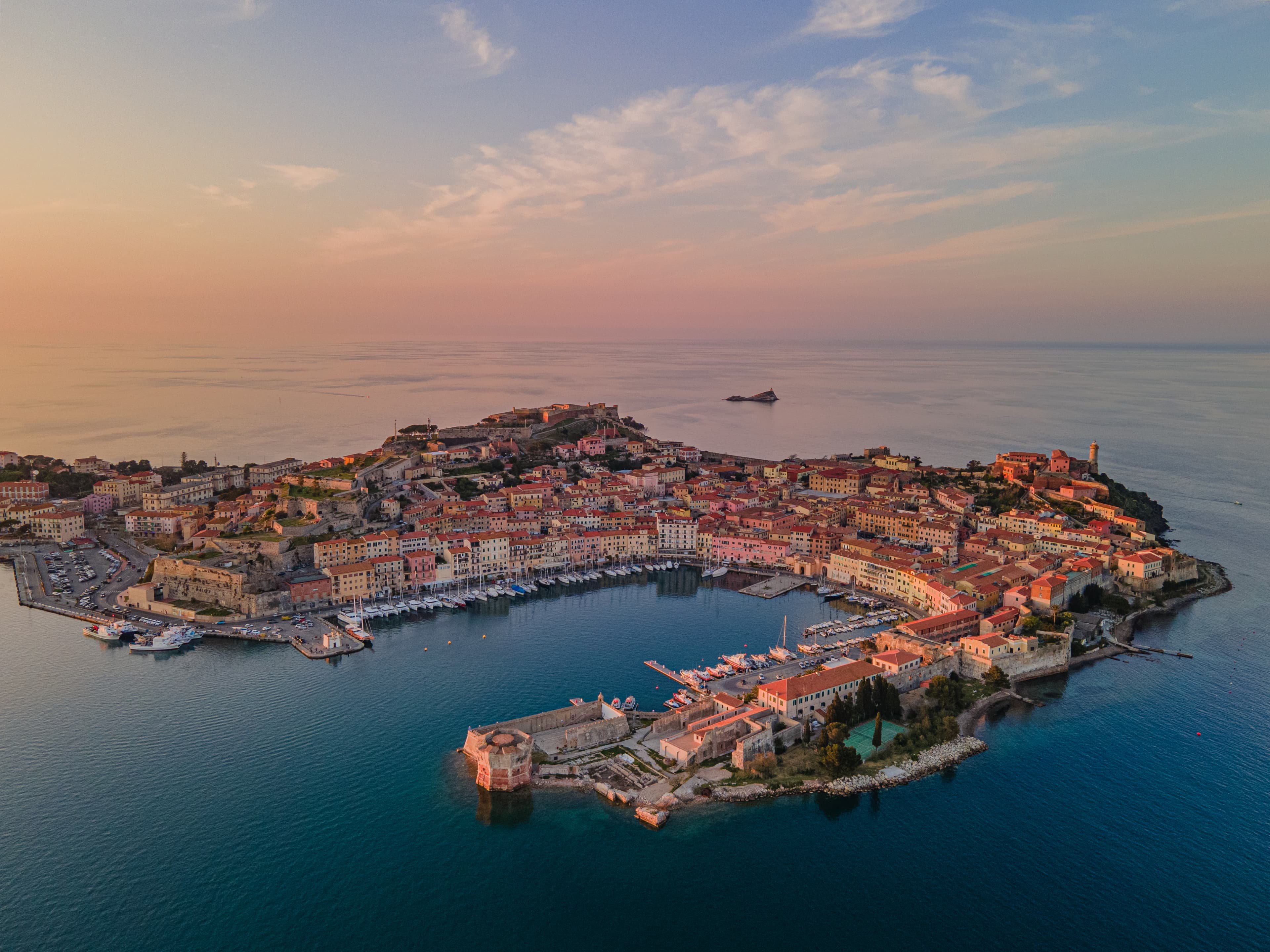
In 1548, Cosimo I de' Medici — first Grand Duke of Tuscany — was tasked by Emperor Charles V with defending the island. The settlement of Ferraia was transformed into a Renaissance fortress city. Cosimo named it Cosmopoli — 'the city of the cosmos', a model of rationality and civilisation.
On the promontory rose Forte Falcone and Forte Stella; at the base, Forte della Linguella. The bastioned walls were designed by military architect Giovan Battista Bellucci. In 1555, the corsair Dragut ravaged the island — but never managed to take Portoferraio. The Medici fortresses held.
That city is still called Portoferraio. Its walls still descend to the sea.
1589 — Sala delle Carte Geografiche
Elba at the Uffizi
Ferdinando I de' Medici, son of Cosimo, wanted the Medici territories immortalised on the walls of the Uffizi itself. He commissioned painter Ludovico Buti to fresco an entire room, following the drawings of cartographer Stefano Buonsignori.
The result: three enormous geographic maps at 1:30,000 scale, with over 1,200 place names in gold letters, Renaissance landscapes and mythological motifs. The third depicts the Island of Elba — with the Gulf of Campo, Porto Longone, Capo Rocci, Renaissance sailing ships and dolphins in the blue Mediterranean. The island was so central to the Medici horizon that it warranted an entire wall of the Uffizi.
The room was closed to the public for twenty years. It reopened in 2021.
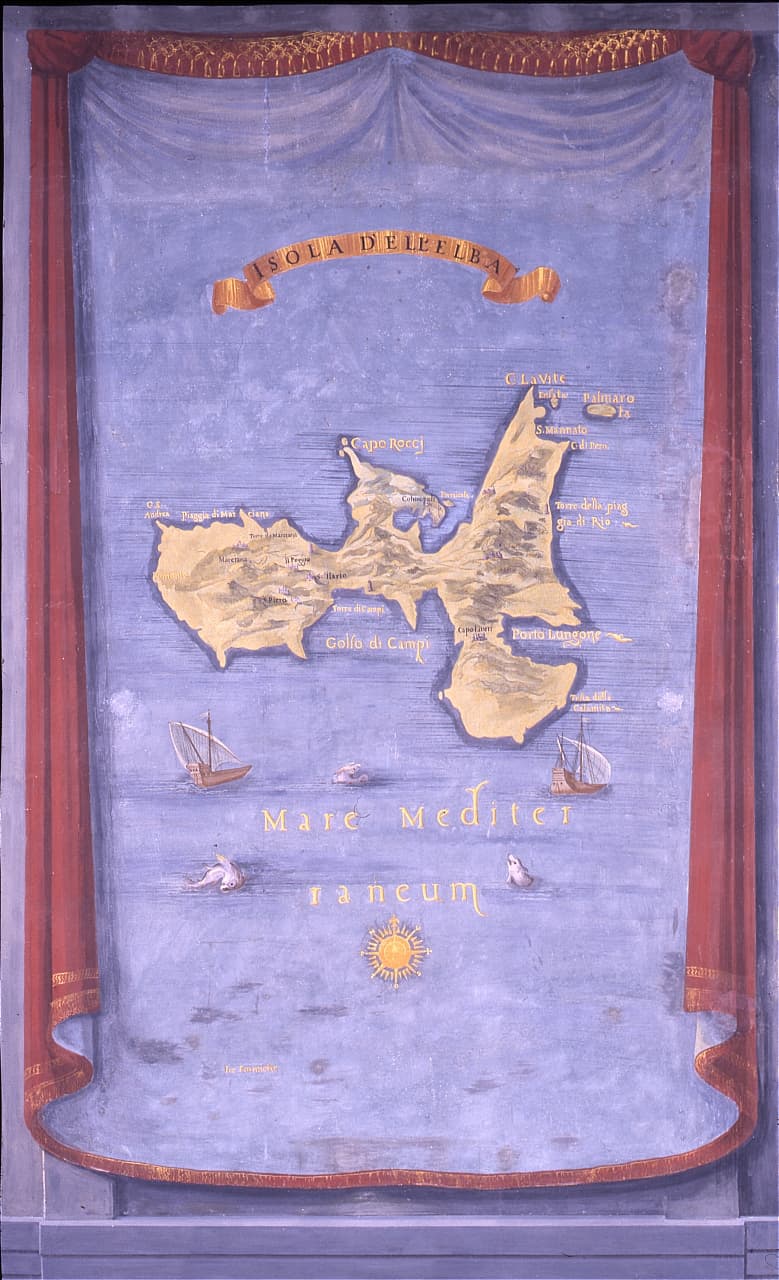
Ludovico Buti and Stefano Buonsignori, Geographical map of the Island of Elba, 1589. Gallerie degli Uffizi, Florence. Ministry of Culture, ICCD — CC BY 4.0.
“From myth to Botticelli's brush, from the brush to Cosimo's fortresses, from the fortresses to the Uffizi map: Diadema di Venere is the name that holds this thread together — and each gemma is a way of inhabiting it.”
Discover the Gemme
Three houses on the island that inspired the name.
Our Properties